
By Amanda Zurface, JCL
In the Christian life, we learn to follow Jesus more closely toward the Cross, and along the way we are invited to look honestly at what we carry. That may include grief, disappointment, fear, old wounds, illness, anxiety, family tension, the ache of unmet hopes, or the weight of loneliness.
With that honesty comes a question that is both deeply human and deeply spiritual: What do I do with my pain?
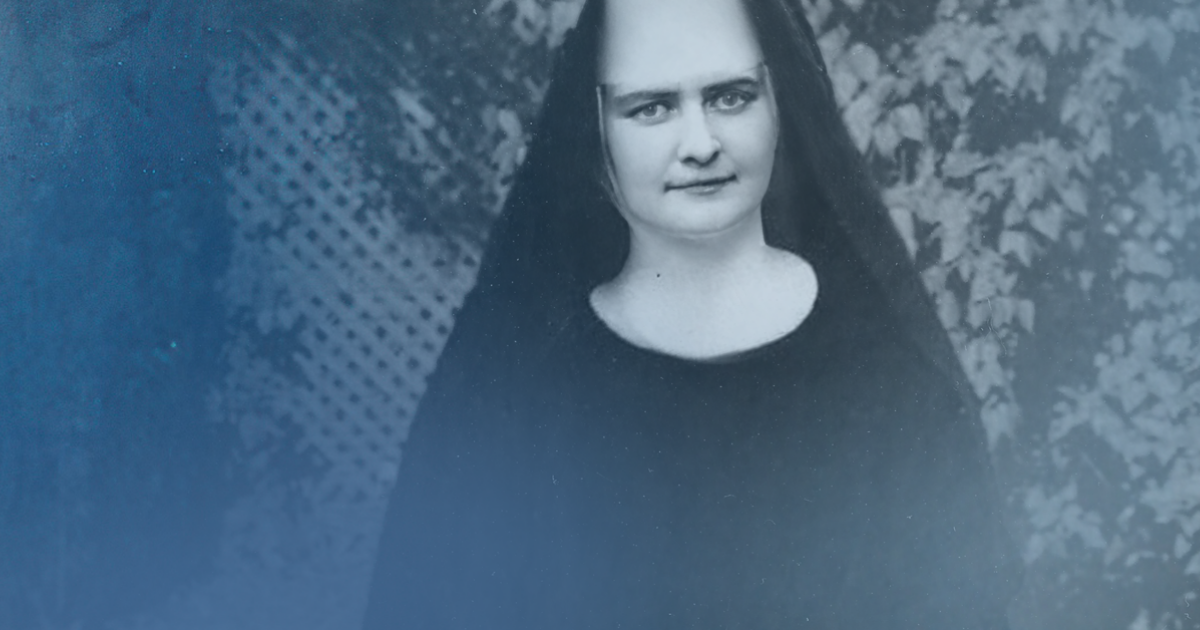
In the Sister Annella Guild’s webinar, “Sister Annella: What Do I Do With My Pain?” I invited us to explore suffering through the teaching of the Catholic Church and through the witness of Servant of God Annella Zervas, OSB. Redemptive suffering can feel mysterious because suffering so often seems senseless. That confusion can lead to discouragement. It can also lead to despair. Yet the Christian faith offers not a simplistic explanation, but a real hope: God is not absent in suffering.
Christianity makes a startling claim. God enters into human suffering and transforms it from within.
This post highlights the main themes of the webinar. It also offers practical ways to bring your pain to Jesus, with Sister Annella’s story as our guide.
Suffering and Redemptive Suffering: Why the Difference Matters
It is important to name a distinction. Suffering is an experience that can feel senseless and isolating. It can shake our faith and tempt us to believe we are alone.
Redemptive suffering, however, does not mean pain is good. It does not mean we should pretend suffering does not hurt. The Church never romanticizes suffering. We are called to relieve suffering wherever we can through love, medicine, justice, compassion, and community.
Still, when suffering cannot be removed, the Church teaches that it can be united to Jesus. In that union, suffering becomes spiritually fruitful. This is not because suffering is good in itself, but because love gives suffering meaning.
Even then, mystery remains. The Church does not claim to answer every question about why certain sufferings happen to certain people. In a sense, that is a mercy. Like children who cannot yet carry the full weight of an adult conversation, we are not always able to understand the mysterious unfolding of life. Yet we are given enough light to walk forward in trust.
You may be in a season right now when that light matters more than ever.
The Question We All Ask: If God Is Good, Why Does He Allow Pain?
At some point in life, every person finds themselves asking the same set of difficult questions. Why is there suffering? Why is there death? Why do I have to lose someone I love? Why do I have to be sick? Why did this happen to me? Beneath all of these questions lies an even deeper one that can feel almost unbearable: if God is good, and if God is Love itself, why does He allow pain?
The Catholic Church teaches that suffering was not part of God’s original design for creation. In the beginning, the world was created in harmony. Humanity lived in right relationship with God, with one another, and even within themselves. Creation was ordered toward peace and wholeness. There was no pain, no sickness, and no death. Life existed in a state of unity with the One who created it.
Through original sin, that harmony was fractured. Disorder entered the human condition, and suffering and death became part of our reality. This is not because God delights in pain, but because real love requires real freedom, and freedom includes the possibility of rejecting God.
At the same time, the Church is clear that not every suffering is a direct consequence of personal sin.
Some suffering flows from moral evil, which includes the misuse of human freedom through war, injustice, exploitation, and cruelty.
Other suffering comes from natural causes, which include illness, aging, and disasters. These are signs of a creation still longing for redemption, as Saint Paul writes.
So the Church acknowledges suffering as a profound mystery. Yet here is where Christianity becomes radically different from many other ways of viewing the world.
God does not remain outside the mystery. He enters into it.
The Cross Is the Answer: God Meets Us in Our Pain
In Salvifici Doloris, Pope Saint John Paul II teaches that the answer to suffering is not merely an idea. It is an event. It is the Cross of Jesus Christ.
In Jesus, God takes on flesh and experiences the depths of human suffering, including rejection, betrayal, physical agony, abandonment, and death. This is central to the Christian faith. Because God became man, suffering is no longer a place where God is absent. It becomes a place where God reveals Himself as Love.
On the Cross, suffering becomes an act of love. Because Christ offers His suffering for the salvation of the world, suffering itself is transformed. This is what the Church calls redemptive suffering.
Saint Paul writes that he “completes what is lacking in Christ’s afflictions for the sake of His Body.” The Church understands this not as Christ’s sacrifice being insufficient, but as an invitation. Our suffering, joined to Jesus, can participate in His saving work.
That means something very important for each of us: nothing suffered with Christ is wasted. Not the grief you cannot explain, not the pain you did not choose, not the fear that keeps resurfacing, and not the daily burden you keep carrying. When united to Jesus, suffering can become a place of encounter, transformation, and sanctification.
How Sister Annella Helps Us Answer: What Do I Do With My Pain?
Servant of God Annella Zervas offers a unique witness to this mystery. Her life is filled with themes that stand out immediately, including acceptance, trust, joy, and intimacy with Jesus in suffering.
Her official biography, Ticket to Eternity, recounts not only the intensity of her illness, but also the remarkable way she endured it. Those who cared for her witnessed tenderness, peace, and spiritual clarity, even as her suffering grew severe.
Sister Annella’s pain was extraordinary. Yet it leads us to a simple, universal question: When suffering comes, what do we do with it?
Watch our webinar here.
Ten Ways Sister Annella Teaches Us to Carry Pain with Jesus
Below are ten moments from Sister Annella’s life that offer practical guidance for our own suffering, whether that suffering is emotional, physical, spiritual, or relational.
1. Offer Your Pain Simply: “All for Jesus”
Sister Annella was heard whispering in the night, “All for Jesus. All for Jesus.” Even as her body weakened and pain intensified, she turned suffering into an offering of love.
What to Do With Your Pain: When pain rises, pray, “All for You, Jesus.” Then make one small act of love. You might send an encouraging message, choose patience with a family member, or forgive an offense.
2. Bring Your Pain to Jesus in the Eucharist
Sister Annella wrote, “Jesus is the only One who really understands us and can help us.” For her, Holy Communion was where she received her strength and was assured of Christ’s companionship.
What to Do With Your Pain: Bring your suffering to Jesus in the Eucharist. Name it honestly. Let Him meet you there. Ask for what you need, and then surrender to His will, trusting that He can perfect what you seek for your good.
3. Choose Gentleness and Even Humor
During a painful episode in the hospital, Sister Annella smiled and said, “See, I am playing a ukulele!” Her joy was not denial. It was total trust in God.
What to Do With Your Pain: Choose an act of gentleness today. Refuse to let pain make you harsh. If you can, offer a smile, a kind word, or a moment of lightness that softens the room. These choices do not remove suffering, but they keep the heart from hardening.
4. Ask for Strength for the Next Moment
Sister Annella once said, “Thank God it is over; I hope I have the strength to bear the next one.” She did not pretend suffering was easy. She trusted God for strength one moment at a time.
What to Do With Your Pain: Pray, “Lord, give me strength for this moment.” Let today be today. Do not ask your heart to carry tomorrow’s burden before grace arrives.
5. Recognize Endurance as Grace
Sister Annella said, “I could not do so myself if God did not give me the strength.” She recognized that endurance was not her achievement. It was grace.
What to Do With Your Pain: Instead of forcing yourself to be strong, ask God for His strength. Grace is real help. It is God’s own assistance given freely, especially when we cannot carry what we are facing on our own.
6. Entrust Your Pain to Jesus Through Mary
Sister Annella feared that the pain might become so great that she would forget to offer it, so she entrusted it to the Blessed Virgin Mary to give to Jesus so that nothing would be lost.
What to Do With Your Pain: Pray, “Mary, take this to Jesus for me.” When you are overwhelmed, let your Mother help you. In the Marian way, everything goes through Mary to Jesus, and nothing offered in love is wasted.
7. Remember That Joy Can Exist in the Middle of Suffering
When someone told Sister Annella that she would one day be happy for having suffered, she replied, “But I am happy right now!” Her joy did not come from comfort. It came from belonging completely to God.
What to Do With Your Pain: Remember that joy is not the same as comfort. Joy can be steady and supernatural. It can exist even when life is hard, because God’s presence is deeper than pain.
8. Keep Loving Between the “Attacks”
Sister Annella did not wait to feel better before living with love. She continued small tasks, returned to Scripture and the Saints, and even sang hymns and parts of Vespers.
What to Do With Your Pain: Choose the next good thing. It might be one small task you can still do well, one short passage of Scripture, or one small act of love. With God’s help, let your availability and follow-through in the small things become the path forward.
9. Let Your Suffering Become Your Prayer
Sister Annella said, “I offer my sufferings as a prayer. If God had wanted me to pray, He would have given me the ability.” This is a freeing reminder for those moments when prayer feels impossible.
What to Do With Your Pain: When you cannot find words, offer the ache itself. Hold out your hands and pray, “Take this, Jesus. I give it to You.” You are not failing at prayer when you are suffering. Sometimes suffering becomes the prayer.
10. Keep Eternity in View: “My Ticket for Eternity”
Sister Annella said, “I am buying my ticket for eternity, and it is well worth the price.” She did not believe God wanted her to hurt. She believed that staying faithful through pain was leading her into union with Him.
What to Do With Your Pain: “Jesus, use this to make me ready for heaven, and use it to help someone else.” You can cry while you pray. Tears do not contradict faith. They can become the place where you allow Christ to hold you.
Does God Ask Us to Seek Suffering?
Sister Annella seemed to experience a deep intimacy with Jesus and, at times, a distinctive vocation to receive suffering. In rare cases, and only with careful spiritual direction and proper discernment, some Saints believed that God invited them to accept, and even to ask for, a greater share in suffering. They offered this suffering in union with Christ for the good of others. These individuals are sometimes described as victim souls. It is possible that Sister Annella could one day be considered among them, but this is not the ordinary Christian path. A call like this must always be carefully discerned.
As we close, this point is essential. God does not love pain for pain’s sake. He is not asking you to go searching for suffering or to prove your faith by hurting yourself. His first invitation is mercy: “Come to me… and I will give you rest.” Bring the suffering you already carry to Jesus. Instead of praying for more pain, pray for grace: Lord, give me the grace to do Your will, and the strength to bear what You permit.
A Prayer to Conclude This Reflection
The deepest answer to suffering is not an explanation, but a Person: Jesus Christ, crucified and risen. On the Cross, God does not remain distant from your pain; He enters it, bears it, and transforms it. So today, bring Him what you are carrying and ask yourself what you will do with your pain. Will you bury it, numb it, or allow it to harden you, or will you bring it to Calvary and place it in His hands?
To close our reflection, I invite you to pray: Jesus, I give You [name your suffering]. I do not understand it, but I trust You. Use it for good and for love, for my healing and salvation, and for the salvation of others. Amen.
About the Author
Amanda Zurface, JCL, is the Diocesan Postulator for the Cause of Sister Annella Zervas. Holding degrees in canon law and theology, she was introduced to Patrick Norton in 2020 and moved to assist in advancing the cause. She considers it a grace to share Sister Annella’s story, which shows us how to entrust our pain to God and live in deep friendship with Christ, our truest friend.